.C0Oj_sl7_Z1Ajpfu.svg "1971 Silver Dollar Value")
1971 Silver Dollar Value: Understanding Collectibility and Worth
Introduction
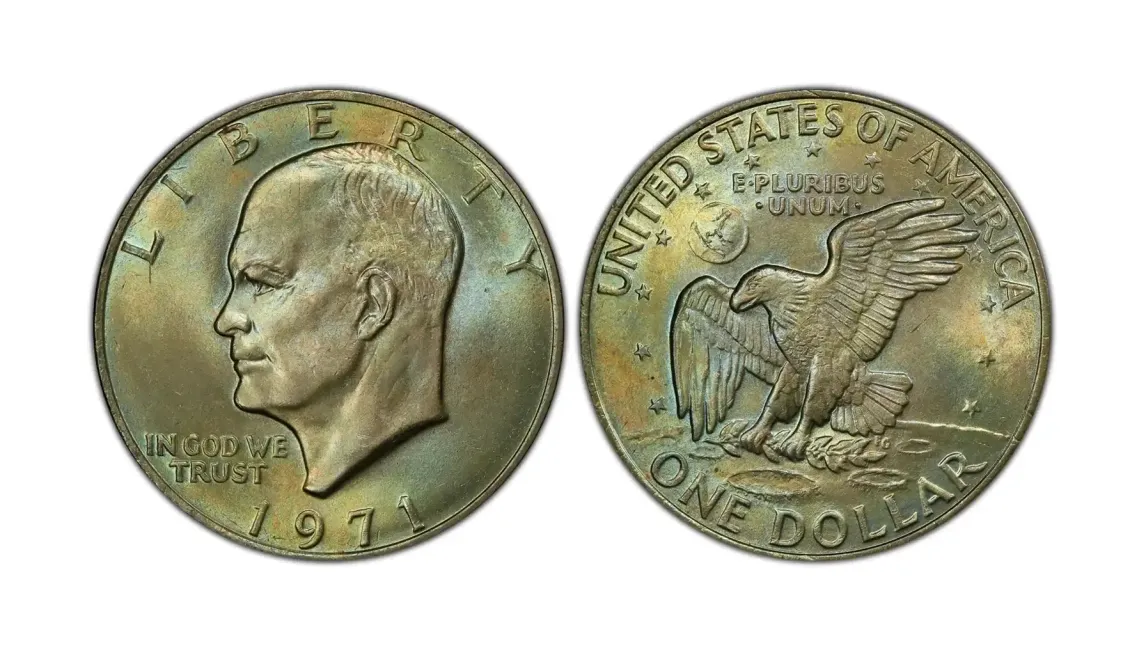
The 1971 Silver Dollar value is a captivating piece for numismatists and casual collectors, celebrated for its aesthetic appeal and historical significance. This coin embodies a pivotal era in U.S. coinage as it marked the return of dollar coins since Peace Dollars in 1935. The Eisenhower Dollar features President Dwight D. Eisenhower’s portrait, offering a numismatic tribute to his legacy. Below is a comprehensive table detailing its specifications alongside mintage figures, providing a robust overview of this iconic coin.
| Specification | Data |
|---|---|
| Year of Issue | 1971 |
| Mint Marks | No mint mark (Philadelphia), D (Denver), S (San Francisco) |
| Weight | 24.59 grams |
| Diameter | 38.1 mm |
| Composition | Copper-Nickel Clad Copper for Circulation, Silver for Collectors |
| Mintage (Philadelphia) | ~47,799,000 |
| Mintage (Denver) | ~68,587,424 |
| Mintage (San Francisco) | ~4,265,234 (Proof) |
This intriguing historical piece not only serves as a key collector item but also offers insights into the U.S. monetary system’s transition during the 1970s, with details that can be explored using a free coin identifier app or a free coin scanner app.
1971 Silver Dollar Value
Price Disclaimer
The values of 1971 silver dollars provided below are approximate retail ranges as of the current year and can vary significantly based on coin grade, the authenticity certified by grading services, auction results, and the overall market demand.
Value Table
| Condition & Type | Average Value (USD) |
|---|---|
| Circulated | $1.00 – $1.30 |
| Uncirculated (MS60–MS66) | $5.00 – $20.00 |
| High-Grade Uncirculated (MS67+) | $50.00 and up |
| Proof – Clad (proof mint) | $6.00 – $10.00 |
| Proof – Silver | $10.00 – $20.00 |
| Error Coins | Varies by error |
Factors That Influence the Value
Mint Mark and Mintage: The mint mark appears on the reverse side of the coin, just above the date. The 1971 silver dollar was minted at Philadelphia, Denver, and San Francisco, with varying mintage levels. Philadelphia coins lack a mint mark, while Denver’s bear a ‘D’ and San Francisco’s an ‘S’. Coins with the San Francisco mint mark, particularly proofs, are typically more desirable due to limited production.
Condition and Grade: The condition and grade of a coin greatly influence its value. The Sheldon Scale, which ranges from 1 (poor) to 70 (perfect), is used to determine a coin’s condition, with uncirculated and high-grade pieces being more sought after.
Metal Composition: A majority of the 1971 Eisenhower silver dollars in circulation are made from a copper-nickel clad composition. However, the specially minted Eisenhower dollars from San Francisco boast a 40% silver composition, making them more valuable to collectors.
Errors and Varieties: Coins with verified mint errors, such as die chips or doubling, often fetch a premium price due to their rarity and intrigue. Such errors can make a 1971 silver dollar rare and attractive to collectors. Verifying errors through third-party grading services can further authenticate and enhance their value.
Rarity and Errors of the 1971 Silver Dollar Value
Collecting 1971 silver dollars can be particularly enticing due to the various errors and varieties associated with them. Errors make certain coins stand out, offering unique collectibles and sometimes commanding premium prices. Here are a few notable errors and how they enhance the 1971 silver dollar value.
Known Errors
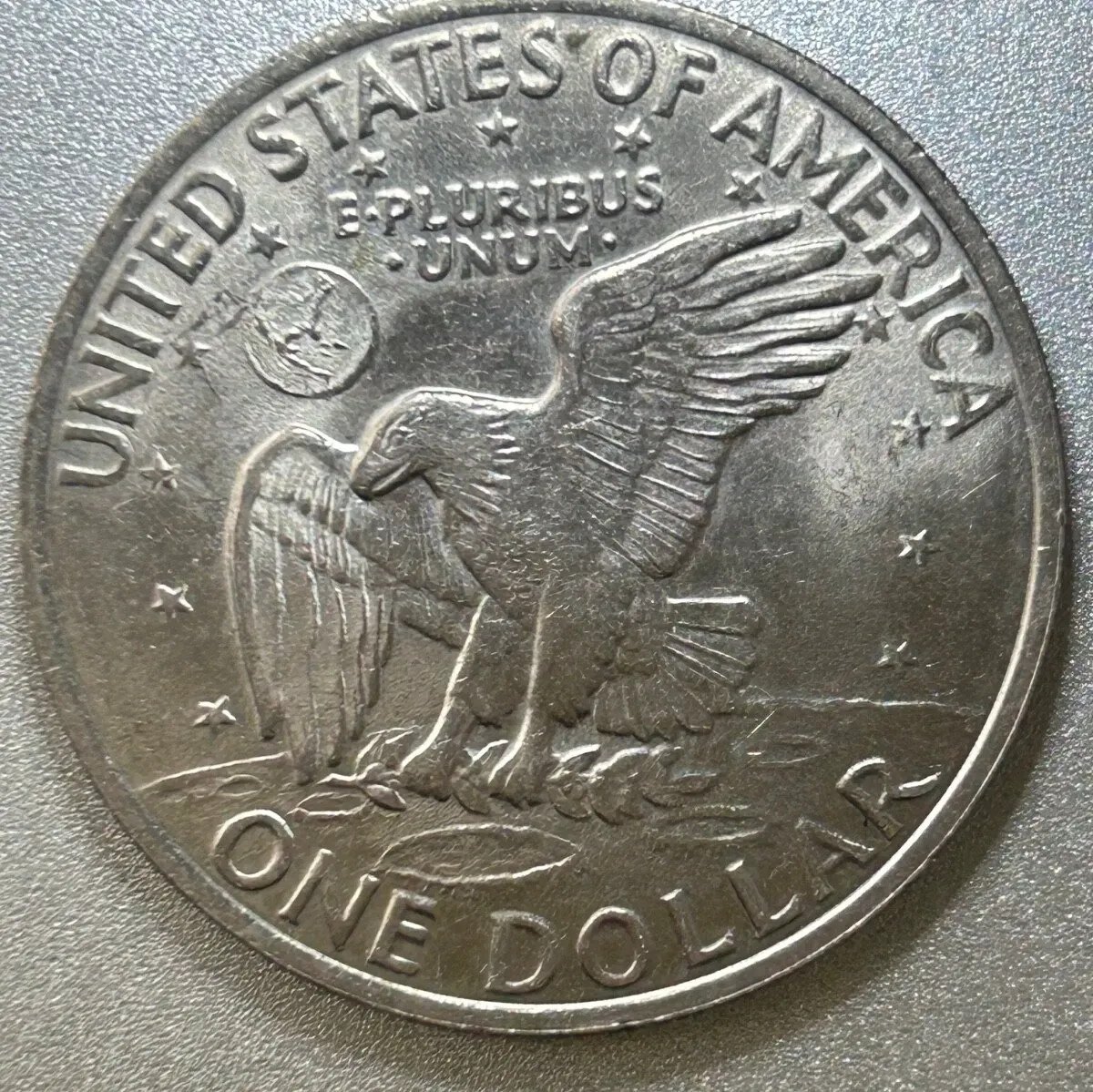
Major Die Clash
A die clash error occurs when the dies imprinting the coin engage without a planchet between them, leaving parts of the design on the wrong side of the coin. On the 1971 Eisenhower silver dollar, this might appear as faint mirrored images of the obverse design on the reverse or vice versa. Such errors are valuable, with an estimated value ranging from $200 to $700+, depending on the severity and coin condition. Rarity Level: Rare
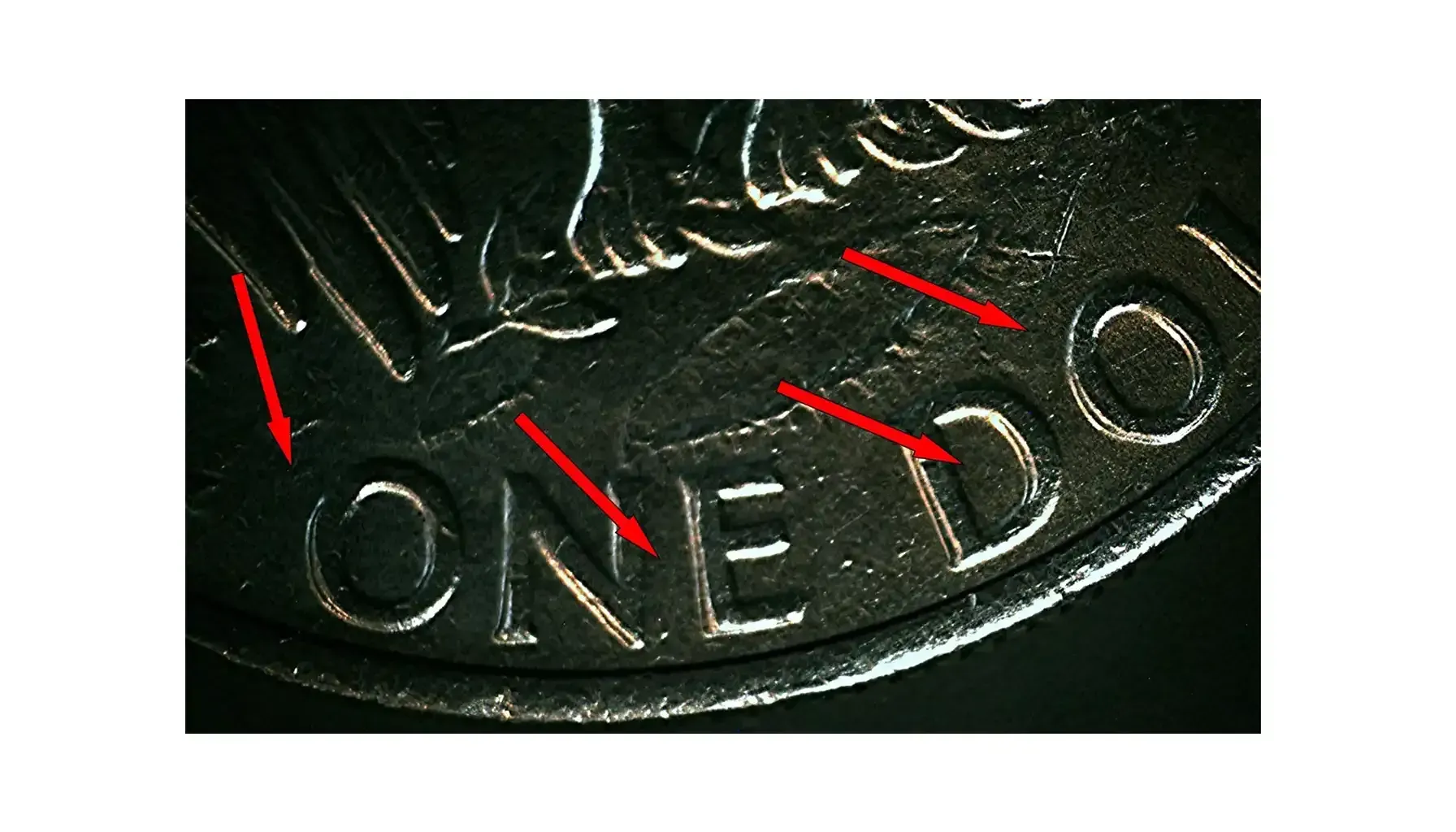
Double Die Obverse
This error is characterized by doubled elements visible in specific areas like the date or inscriptions. The doubling can attract serious collectors, with coin values typically ranging from $100 to $350+ depending on clarity and preservation. Rarity Level: Uncommon
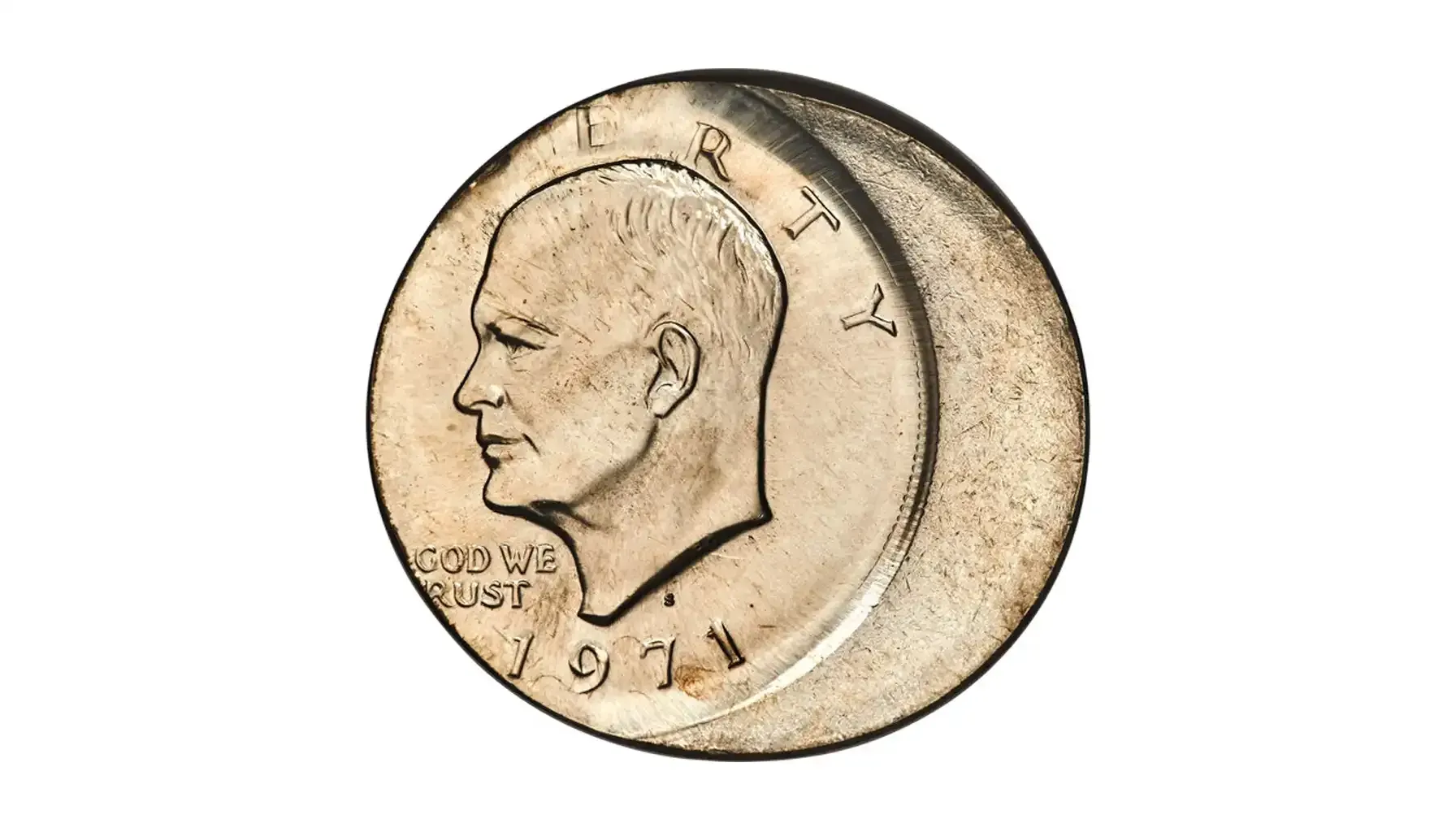
Off-Center Strike
An off-center strike varies widely in terms of off-center percentage. More dramatic shifts might reveal some blank portions of the planchet and can significantly influence price, estimated at $50 to $150 based on how much of the design is missing. Rarity Level: Common
Price Impact Summary
Minor Errors: Small die chips or slight misalignments typically have mild effects on value unless particularly striking or unusual.
Major Errors: Major errors such as significant double dies or severe die clashes can drastically increase a coin’s value due to their rarity and visual appeal.
Condition Impact: High-grade examples, especially those in uncirculated or near-perfect states, command more at auction, underscoring the importance of grade when determining the error’s worth.
Authentication: Verification of error coins by reputable third-party services like PCGS or NGC is crucial. Certified authenticity not only adds to the coin’s credibility but often its value as well.
Mint Marks & Mintage
Understanding mint marks and mintage is crucial when assessing the 1971 silver dollar value. The 1971 Eisenhower Dollar, or “Ike Dollar,” was minted without a silver content for general circulation, but there are notable exceptions and specific details that collectors should be aware of.
Mint Mark Locations
The 1971 silver dollars were struck at three U.S. Mint facilities: Philadelphia, Denver, and San Francisco. While Philadelphia coins lack a mint mark, you can find the “D” mark on coins minted in Denver and the “S” mark on those from San Francisco. These mint marks are located on the obverse side of the coin, directly under Eisenhower’s neck.
Mintage Numbers
| Year | Mint | Mintmark | Mintage |
|---|---|---|---|
| 1971 | Philadelphia | - (no mint mark) | Not publicly disclosed |
| 1971 | Denver | D | 68,587,424 |
| 1971 | San Francisco (Proof – Clad) | S | 3,273,564 |
| 1971 | San Francisco (Proof – Silver) | S | Not publicly disclosed |
These numbers illustrate that the Denver mint produced the most coins, making the 1971-D Silver Dollar relatively common in circulated condition. However, Proof coins from San Francisco are more desired due to their limited numbers.
Scarcity Considerations
The scarcity of a 1971 silver dollar depends significantly on the mint mark and the minting process. San Francisco’s Proof silver issues offer a unique blend of scarcity and desirability because they contain 40% silver, unlike general circulation coins, which are primarily copper-nickel clad. The chance of finding a high-grade uncirculated or a proof coin can add value to an Ike Dollar collection.
Collecting attention often focuses on these mint-specific variations, which can lead to differing levels of interest and demand within the numismatic community. Leveraging knowledge of mint marks and mintage numbers can substantially assist collectors in determining which 1971 silver dollar might be a noteworthy addition to their collection.
1971 Silver Dollar Value Facts and Trivia
Design Details
Obverse: The 1971 Eisenhower silver dollar features a bust of President Dwight D. Eisenhower facing left. This design, created by Chief Engraver Frank Gasparro, is framed by the word “LIBERTY” at the top, and the year “1971” at the bottom.
Reverse: The reverse design depicts an eagle landing on the moon, a nod to the Apollo 11 lunar mission, with Earth shown in the backdrop. It also includes “UNITED STATES OF AMERICA” and “ONE DOLLAR” inscriptions.
Inscriptions: “E PLURIBUS UNUM”, “LIBERTY”, “IN GOD WE TRUST”, “1971”, “UNITED STATES OF AMERICA”, “ONE DOLLAR”
Year: 1971
Release Information
Release Date: 1971
Series Context: The 1971 Eisenhower dollar was the first dollar coin issued by the U.S. Mint after the Peace dollar series ended in 1935. This series reintroduced a larger circulation coin and commemorated the late president and World War II General Dwight D. Eisenhower, as well as the space program achievements of the 1960s.
Historical Significance: This coin holds cultural importance as it links the remembrance of President Eisenhower’s leadership with the monumental achievements of America’s space exploration.
Quick Facts
- Fact 1: Eisenhower silver dollars were the first U.S. coins to feature President Eisenhower, chosen to honor the five-star general and 34th president.
- Fact 2: The design pays homage to the Apollo 11 moon landing, symbolizing American triumph in space and presidential leadership on Earth.
- Fact 3: Despite being called a “silver dollar,” the circulation coins contain no silver — the silver issues were special collector items.
With the coin’s unique blend of historical and cultural elements, it continues to fascinate collectors both for its aesthetic appeal and its role in American history. This blend of tribute and triumph makes the 1971 Eisenhower dollar a meaningful addition to any collection.
Collecting the 1971 Silver Dollar: A Guide for Enthusiasts
Collecting the 1971 Silver Dollar can be an enriching experience for numismatists of all levels. Here are some essential steps to guide your journey:
Understand the Varieties: Begin by familiarizing yourself with the different varieties of the 1971 silver dollar, such as those minted in Denver, San Francisco, and Philadelphia. Knowing the mint marks and understanding the variations, including clad and silver compositions, are crucial for identification.
Assess Condition and Value: Condition plays a vital role in coin collecting. Use reputable sources to assess the coin’s grade on the Sheldon Scale, ranging from 1 to 70. Higher Mint State grades, especially MS66 and above, can significantly increase a coin’s value.
Check for Errors and Varieties: Look for unique characteristics such as die errors or doubled die varieties. These can add considerable value and interest to your collection. Error coins are often sought after due to their rarity and uniqueness.
Utilize a Coin ID Scanner App: Consider using technology to aid your collection.
Research Market Trends: Stay informed about current market prices and demand for the 1971 silver dollar. Coin auctions can provide insights into how much collectors are willing to pay, which can guide your buying and selling decisions.
Store Coins Properly: Keep your coins in a protective case or album. Proper storage is essential to prevent environmental damage that could affect a coin’s condition and value.
Join Collectors’ Clubs: Engage with other collectors by joining numismatic clubs or online forums. They offer a wealth of knowledge and resources, making it easier to exchange information and learn more about your specific interests.
By following these steps, you enhance your appreciation for the 1971 Silver Dollar while adding to your collection intelligently and enjoyably.
Frequently Asked Questions (FAQ)
Is my 1971 Eisenhower dollar valuable?
Most circulating 1971 dollars (with no mint mark or a “D” for Denver) are copper-nickel clad and generally worth only face value ($1) in circulated condition. However, the 40% silver versions minted in San Francisco (with an “S” mint mark) for collectors have a base metal value and can be worth from $10 to over $10,000+ in top condition or with rare errors.
How can I tell if my 1971 dollar is silver?
Look for an “S” mint mark on the obverse (front) of the coin, located just below Eisenhower’s bust. All 1971-S dollars are 40% silver-clad. Coins with no mint mark (Philadelphia) or a “D” mint mark (Denver) are standard copper-nickel clad.
What is the composition of the silver version?
The 1971-S silver dollars are composed of an outer layer of 80% silver and 20% copper bonded to an inner core of 79% copper and 21% silver, resulting in an aggregate of 40% silver and 60% copper, with a total silver content of 0.3162 troy ounces.
Were there any rare errors in 1971?
Yes, several rare errors and varieties exist, primarily on the San Francisco-minted silver issues. Notable examples include the “Peg Leg” variety (where the “R” in LIBERTY lacks a serif at the bottom), re-punched mint marks, and double dies. Some of these error coins have sold for thousands of dollars at auction.
Why does the reverse have an eagle landing on the moon?
The reverse design, created by Frank Gasparro, is based on astronaut Michael Collins’ Apollo 11 mission patch, commemorating the historic moon landing, which occurred the same year as Eisenhower’s death.
Were 1971 dollars issued for circulation?
Were 1971 dollars issued for circulation? Yes, the Philadelphia and Denver mints produced millions of copper-nickel clad coins for general circulation, but they did not circulate well due to their large size and weight, often being used in casinos instead. The 40% silver versions were strictly for collectors and sold by the U.S. Mint in special packaging.